



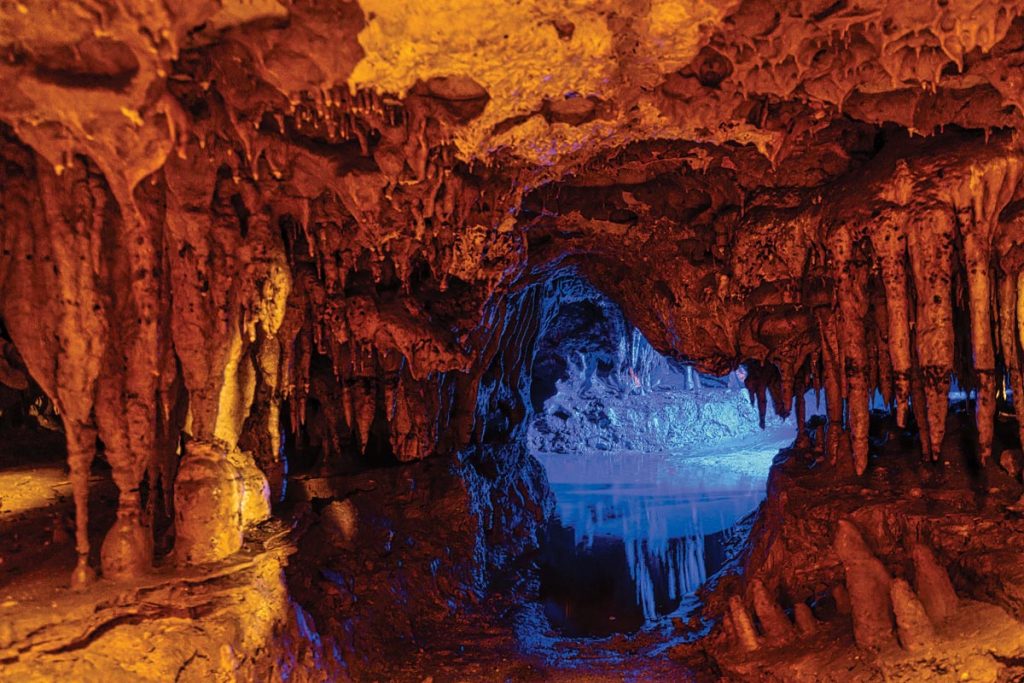
Caves seem antithetical to Florida, which, for the most part, is as flat as a pancake. Journeying down into darkness is the stuff of Dante and Virgil, not folks in flip-flops. No one goes underground for anything. We don’t even have cellars.
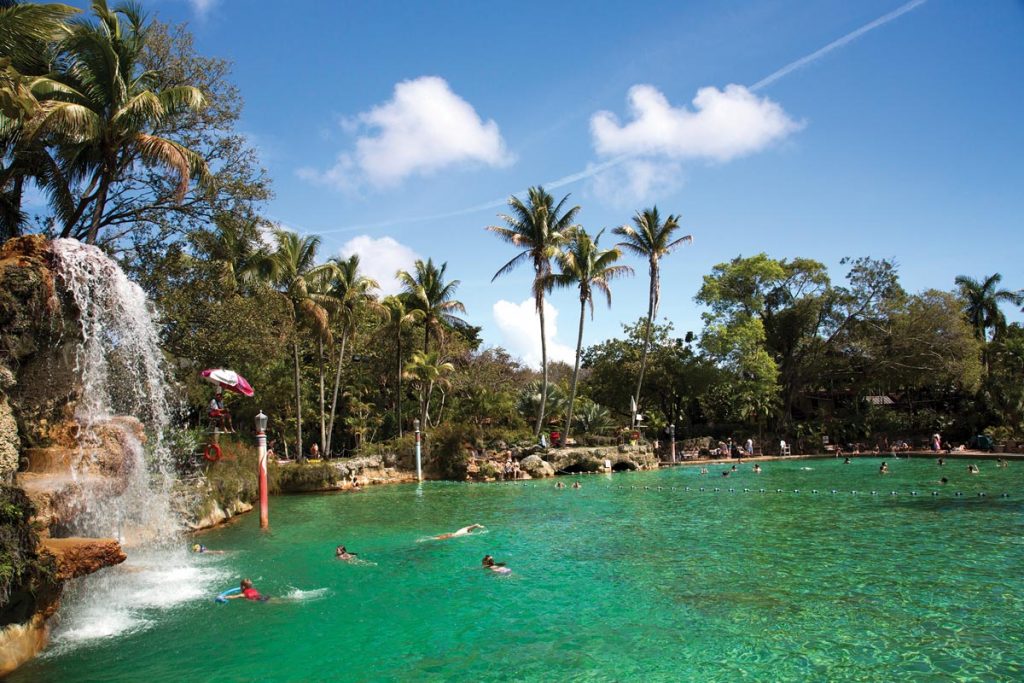
The first Florida caves I ever saw were in Coral Gables’ Venetian Pool, formerly a limestone quarry, built by developer George Merrick in 1924. The largest freshwater pool in the United States, the pool features a grotto with water-filled caves, accessed by diving, that stretch into the hillside. The year I left Miami for Vero Beach, the pool was drained and a concert commemorating Coral Gables’ 75th birthday was held on the pool floor.
While still in Miami, I had heard about other Florida caves that you could access until the 1970s, 50 miles up the coast, now private property hidden among the sea grapes, somewhere in Palm Beach County in the little town of Gulf Stream.
In the late 1850s, a predecessor of the barefoot mailmen, Long John Holman, reportedly used these caves to store provisions and shelter from the rain. The larger of the two was a 20-by-20-foot space he had to bend down to enter, and the smaller one was accessed through a crawlway. It is also speculated that 18th-century pirates, such as Edward Teach, aka Blackbeard, and Anne Bonny, who were familiar with Florida waters, used these caves to store their treasure.
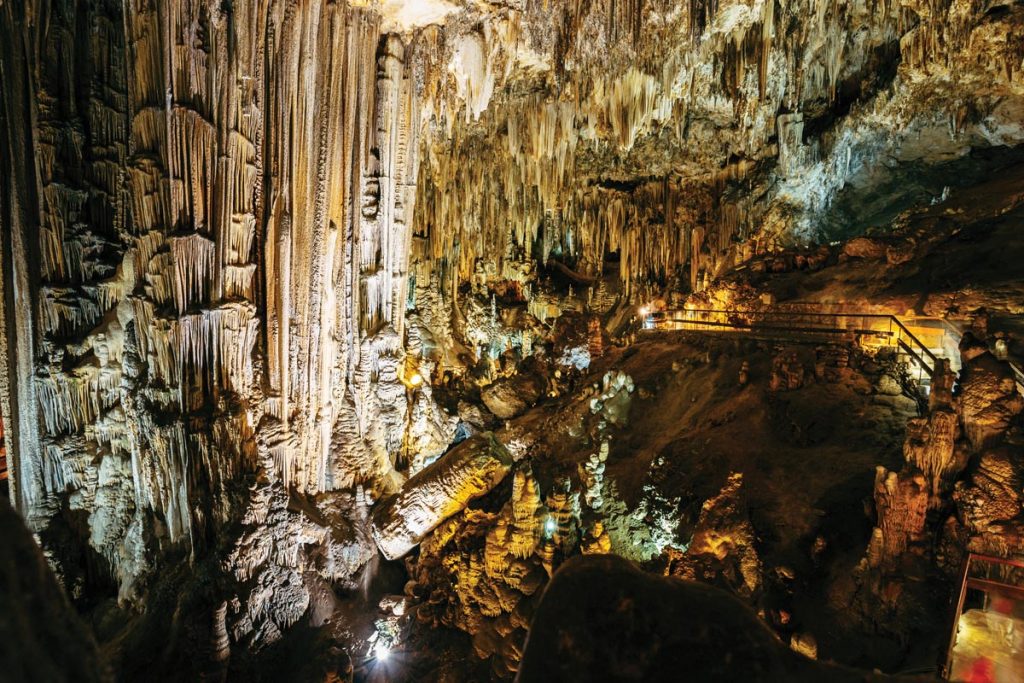
Years later I traveled to Andalusia, Spain, where I visited a series of caverns in Málaga, a serious, big-time prehistoric cave system called Cueva de Nerja. Both burial site and habitat, the cavernous system was divided into two parts, the first consisting of tourist galleries open to the public and the second, restricted galleries open only to researchers.
Even limited to its public spaces, the experience was awesome, with Paleolithic paintings of deer and horses dating back over 20,000 years; a chamber containing some of the world’s largest stalactites; gorgeous crystalline rock formations with elaborate ruches and folds; an “organ corner” where fluted columns can be struck to produce different notes; and a virtual tour of the restricted cave where paintings of hands, executed by Neanderthals over 42,000 years ago, decorate the walls.
The experience was alien to me, a feature of Europe out of my ken, like Stonehenge or the Sistine Chapel. The essence of Florida, in contrast, always seemed to be the outdoors; we revel in the warm, scented air and seek the sky, sun, water, and flat surfaces where we can ride bikes and run. Fishing, surfing, golf, gardening, loafing—these are our pursuits.
Journeying into darkness is not a Florida thing to do. Neither is searching for an invisible entity that refuses to reveal itself; the idea that darkness may be a medium of vision or descent a movement toward revelation is generally not in our repertoire. We have a bias against being under cover. In addition, we may have a bias against depth, something Vertical author Stephen Graham describes as “the dominance of the flat.” We want to be outside. On solid ground. Despite sun blocks of up to 100 SPF, we want the tan to prove it.
Florida isn’t all flat. There is a strip in the center of the state, a narrow band of ridges that stretches along the peninsula’s spine from Lake County south to Sebring, ending in Venus in Highlands County. The highest point on that spine is Sugarloaf Mountain on the western shore of Lake Apopka, near Clermont; it is 312 feet above sea level. Farther south, in Lake Wales, the 205-foot Bok Tower—a historic landmark with a 60-bell carillon—perches 295 feet above sea level.
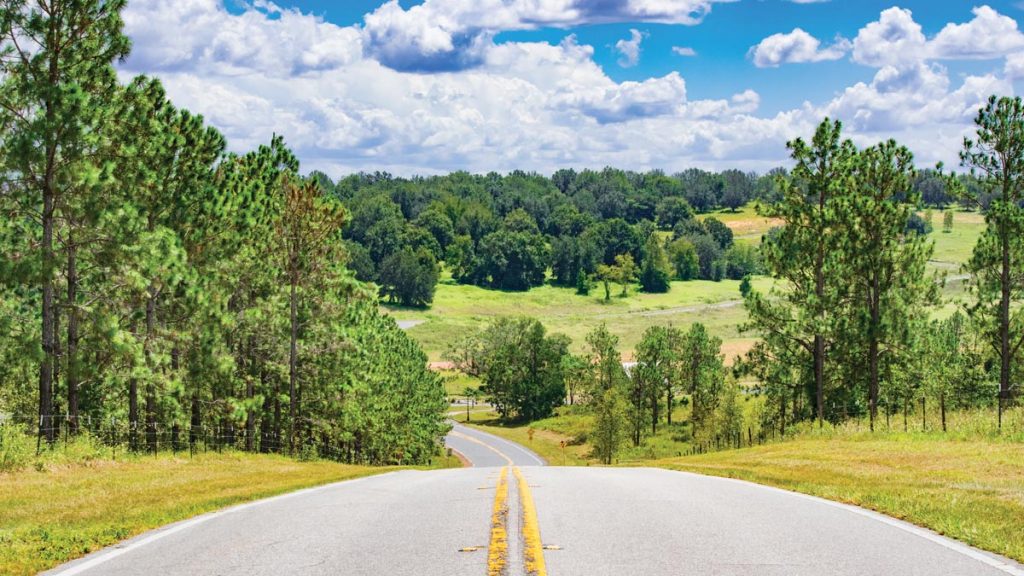
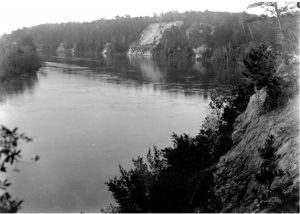
These central ridges, along with the Panhandle, boast more caves than one might expect to find in Florida. These structures include the limestone formations on the bluffs of the Chipola River, which are over 30 million years old, aerated like Swiss cheese and shaped by a buried aquifer—a labyrinth of rift and chamber, an intricate architecture of calcium carbonate skeletons, the bodies of marine organisms that died in the waters of ancient seas.
Many of Florida’s caves are water-filled, unlike Warren’s Cave in Alachua County, its 4 miles of mapped passages constituting the largest known dry cave in the state.
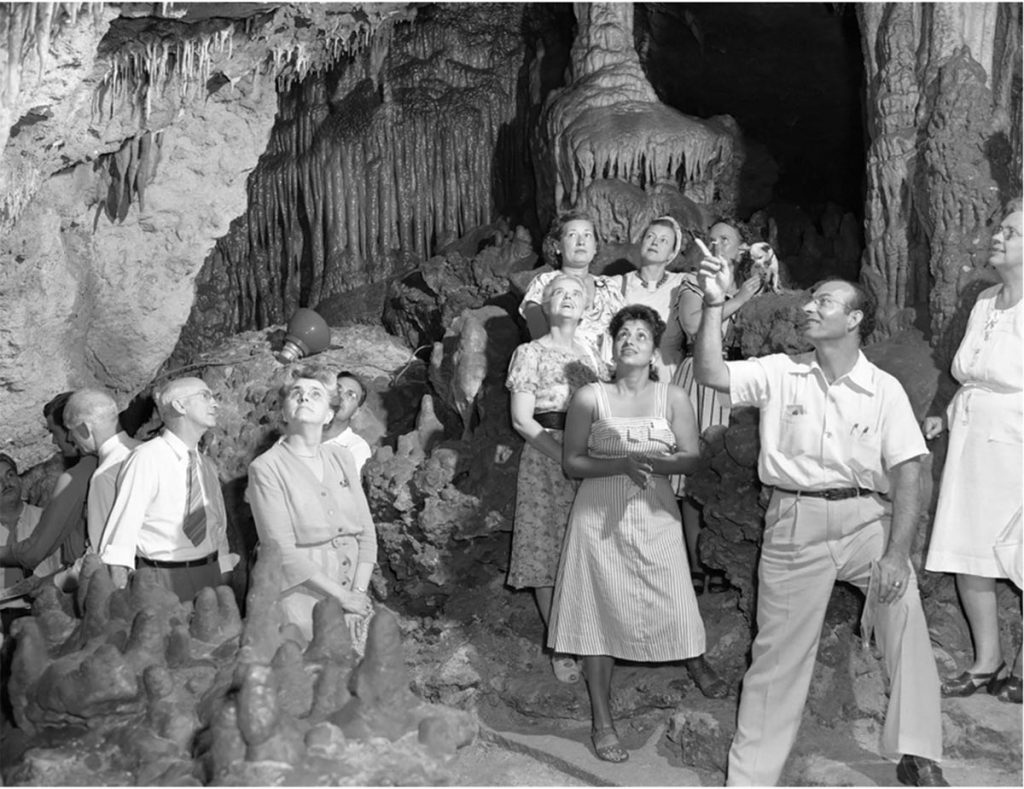
Florida Caverns State Park lies near Marianna in Jackson County, not far from the Alabama state line. Visitors are guided through the park’s cave system, complete with stalagmites and stalactites, columns and flowstones measured in deep time, sheet-like mineral deposits formed over eons by thin films of water flowing down cave walls.
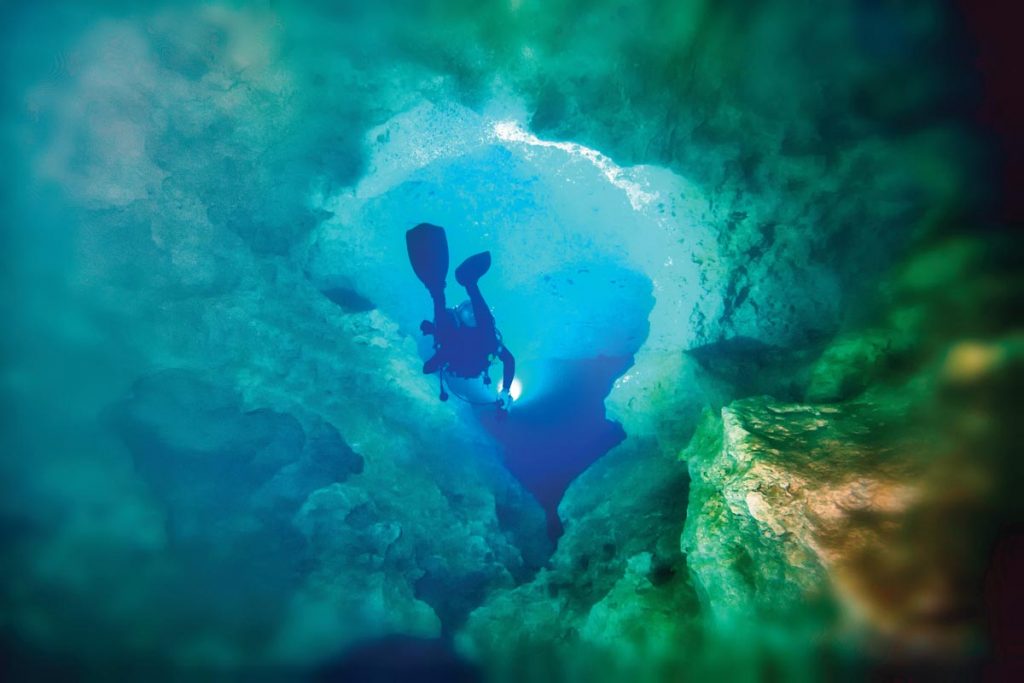
Negotiating these caves requires some walking in a confined, dimly lit, sometimes wet environment as passages turn, turn again, narrow, then lead into a chamber faced with stored memories of trace fossils. Sound booms and resonates. Arthur Conan Doyle wrote of such sound “booming like a drum” in a cave he described as a “hollow land.”
Serious cavers seek caves not in easy view; the locations may even be kept confidential to protect the cave system and keep untrained individuals from injury. Some cavers, called “ridge walkers,” hike across elevated terrain looking for limestone bluffs where caves might be hidden: small holes in the ground venting heated air, sudden dips in the ground, exposed rock faces, sinkholes—any of which may suggest the presence of a vault in the ground. Most carry thermal imaging equipment as well as lidar, a sensing technology that uses pulsed laser light to create 3D models of a landscape.
Many ridge walkers are members of the Florida Speliological Society, an organization that subscribes to conservation ethics and emphasizes training and preparation for caving. Cuts, bruises, falling rocks, hypothermia, and fungal infections are just some of the hazards cavers face. Outfitting for the experience is also taken seriously. Cavers wear helmets with chin straps, helmet-mounted lights, knee and elbow pads, and fitted gloves. They carry food and water, a small first aid kit, and a trash bag. A motto of the organization is “Take nothing but pictures. Leave nothing but footprints. Kill nothing but time.” Since cell phones don’t work in caves, the minimum group size is three; if an accident occurs, one stays behind with the injured person while the other goes for help.
Jacob Fletcher, the president of the society, is also an AI engineer and an Alachua city commissioner. He tells me that one of the goals of the FSS is relationship building—interfacing with researchers, state organizations such as the Florida Fish and Wildlife Conservation Commission, and the local community, particularly residents who might have caves on their property. Members of the FSS range in age from 18 to 82 and represent diverse occupations: firefighters, teachers, retirees, health care professionals, scientists, students, and food service workers.
In our conversation, I refer to a comment about caving once made by Florida journalist Jeff Klinkenberg, who wrote that cavers tend to be strong, slender, and flexible. Fletcher replies that at 6 foot 2 and weighing 160 pounds, he meets only one criterion. When I ask how he manages to squeeze through passages named “knotted rope” and “pancake squeeze,” sometimes crawling on his back for hundreds of feet past spiders and bats, he replies that he takes a moment, decides the next move, then makes it. Sounds like a plan for anyone in a tight squeeze.





 True Tails is a series written by Amy Robinson for Vero Beach’s dog lovers. Ask Amy about your dog’s behavior by clicking below.
Facebook Comments