


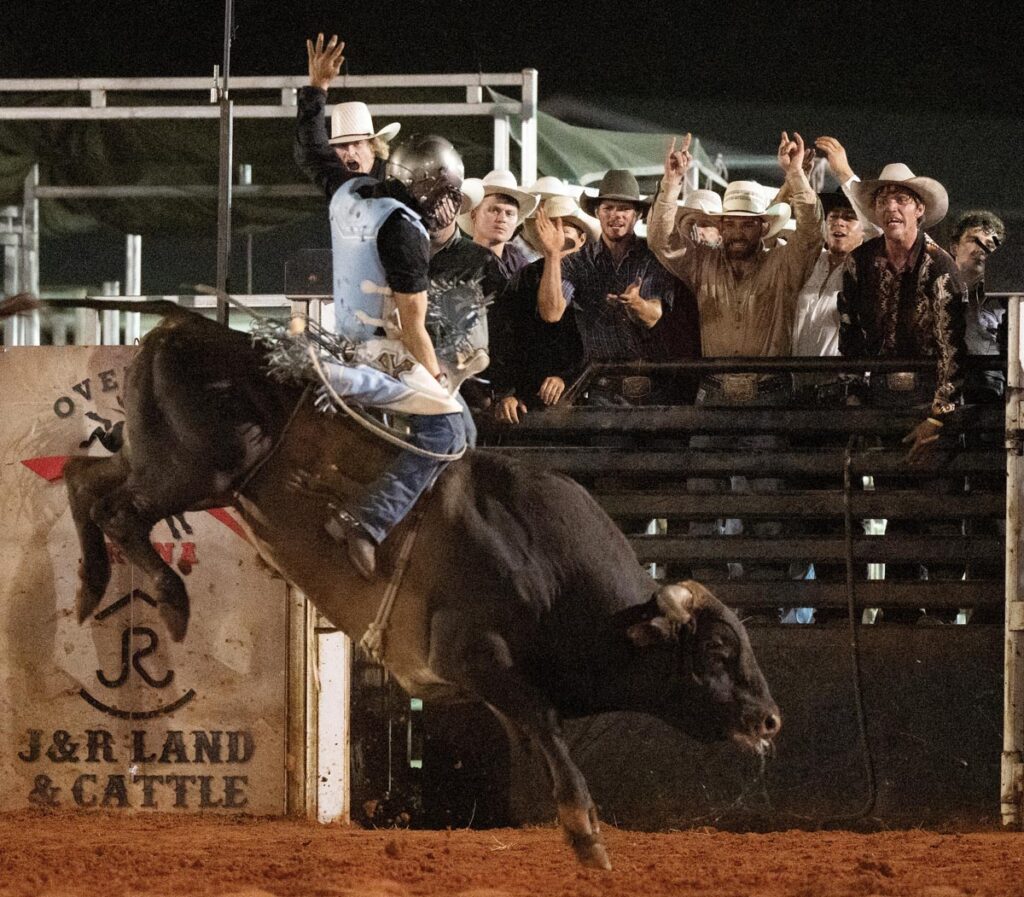
At the end of a dirt road on the outskirts of Vero Beach, an enormous American flag beckons spectators from near and far. In the distance on I-95, trucks salute with a litany of horns as they drive by. Dust rises into the night sky as the music swells and an announcer welcomes the crowd with the Pledge of Allegiance and a prayer. Flanked by bleachers and decks full of fans of all ages, the arena is reminiscent of Field of Dreams, for it was built with grit and people came. What started as a hobby for Shelley and John Englehart is now Overpass Arena, where the classic conflict of man versus nature is fought, eight seconds at a time.
While the conflict at a rodeo may be man versus bull or man versus bronc, the conflict that inspired the origin of Overpass Arena was much more pedestrian: woman versus man’s accumulated “stuff.” A little over a year ago, Shelley Englehart aired her frustrations about her husband’s collection of items in the garage. John good-naturedly told her she needed to “find a hobby” so she would quit bugging him. Little did he know what he set in motion.
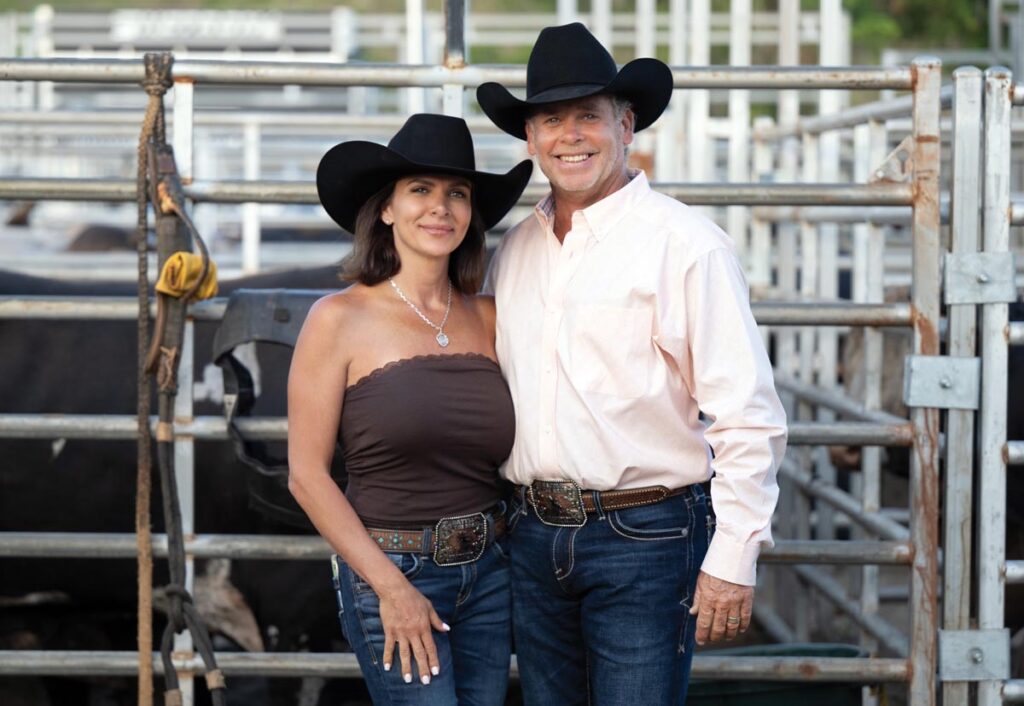
Not long after his request for her to find a hobby, the couple attended a rodeo in Billings, Montana. Shelley found herself fascinated by the bucking bulls; she couldn’t stop thinking about their instincts and training. When they got back to their hotel, she performed an online search for “the life of a PBR [Professional Bull Riding Association] bull” and the obsession began.
Now that Shelley was fully immersed in research, her new hobby was locked and loaded. While John had been in the cattle business for years, bucking bulls struck a different chord for her. To Shelley, bulls were athletes, complete bosses in the arena; yet they acted like children behind the scenes. She wanted to know why, and she wanted to know it all.
Figuring there was no better way to learn than to dive in, the Engleharts decided to purchase a bull. They partnered with Randy Broome of Rafter B Bucking Bulls in Georgia, and while they meant to stop at just one, they wound up buying into an entire breeding program that gave them more than 30 bulls. The idea of being able to care for mothers that would give them the next generation to raise was impossible for Shelley to ignore. The fact that they had little to no idea what to do with these bulls didn’t matter, because, as John says, “Shelley is the missing link who helped me put all the puzzle pieces of my life together and gave it direction. I knew we could do all of this because of her.”
Fueled with excitement, an intense work ethic, and a whole lot of faith, they got down to business. Already partnered with Broome, they also teamed with a friend of his, Chris Jones, a bucking bull trainer and rodeo producer who taught them what they needed to know about raising a bucking bull. He explained that the first three years in a bucking bull’s life are pivotal: during the first two years it trains with a 13-pound dummy, and during its entire third year, the only goal is to put on weight and muscle. At year four, the animal begins to train with a real rider, but, as Jones says, “Even when a bull bucks with a dummy, it hits a pattern and you can tell where the bull will spin and where he will land.”
Whether learning how to train or ensuring the bulls received a nutritional program custom designed for every season, the Engleharts fully committed to their new lifestyle. Most important, they remained insatiable in learning and open to all possibilities. For example, at the PBR finals, they met some riders who suggested that they host a rodeo on their own property. Despite the fact that the Engleharts’ property was not rodeo-ready, the idea was simply too exciting to ignore. With a laugh, John says, “Round about six weeks later, we had a rodeo arena.”
It was literally built from the ground up: electricity was run, red clay dirt was laid, and bleachers were raised. With the help of Jones as their producer, the Engleharts organized a lineup of bucking broncs and bulls and also included fan favorites like mutton busting for small children to ride sheep and bull soccer for adults in protective plastic bubbles that allow them to be the “ball.”
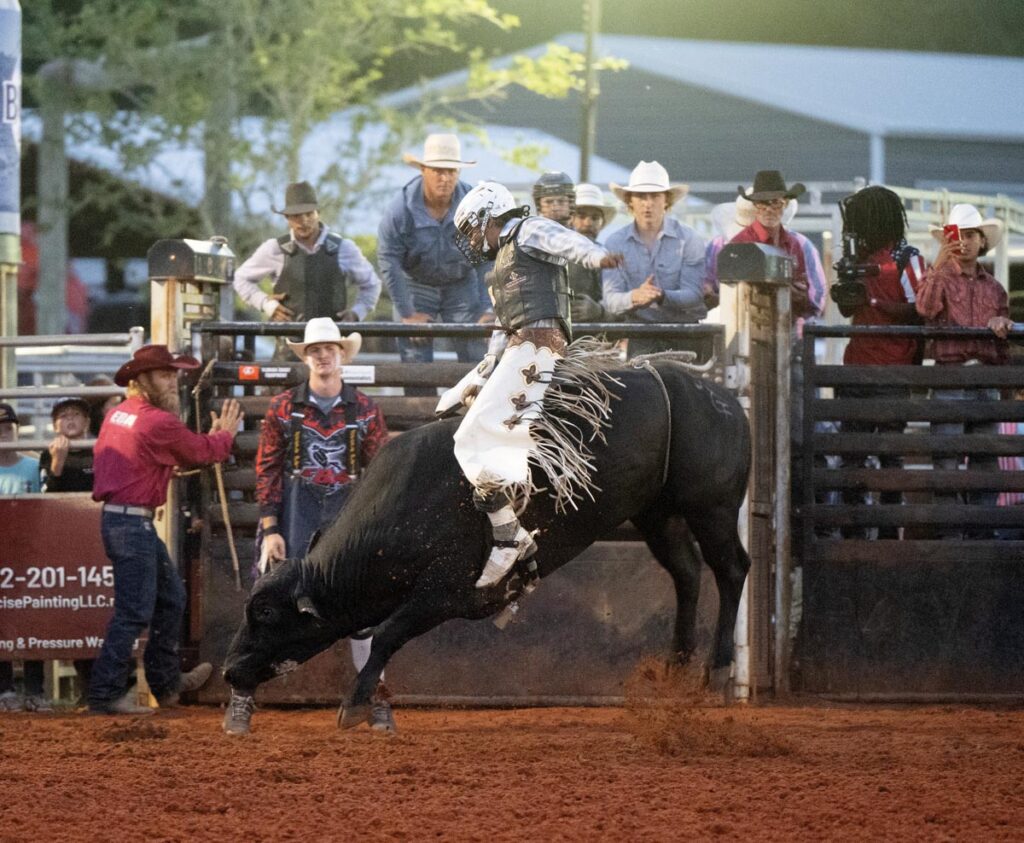
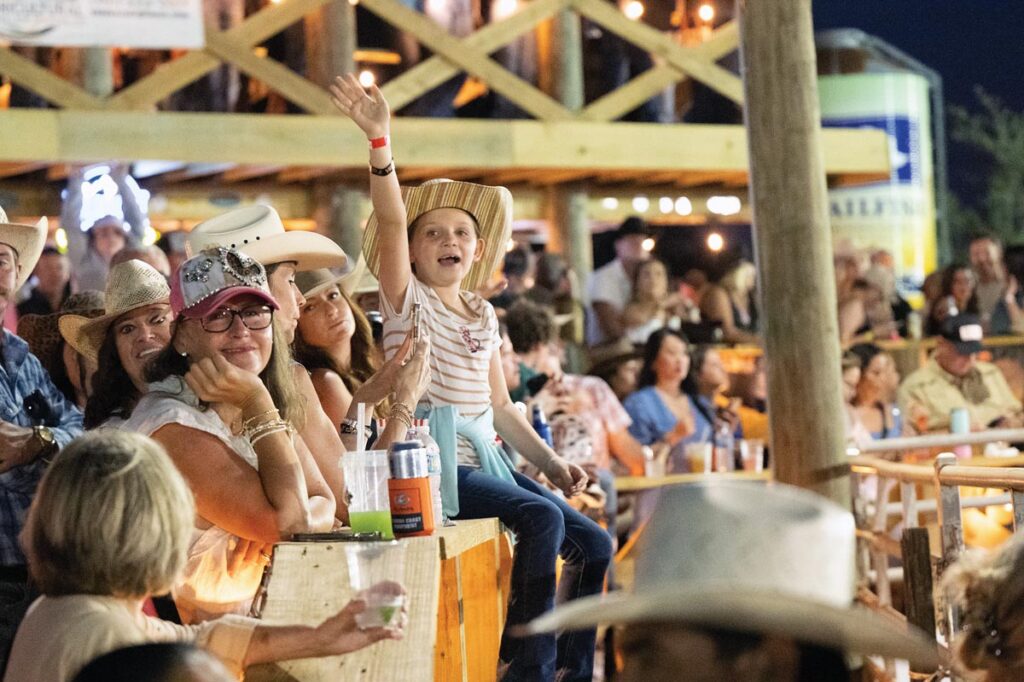
Jones explains, “Everything I plan at each rodeo is for the fans, especially the kids. I won’t cut off access to riders unless it is a safety or security issue. It’s not just about seeing someone ride; it’s about interacting with riders. I want a hometown feel no matter where I go.”
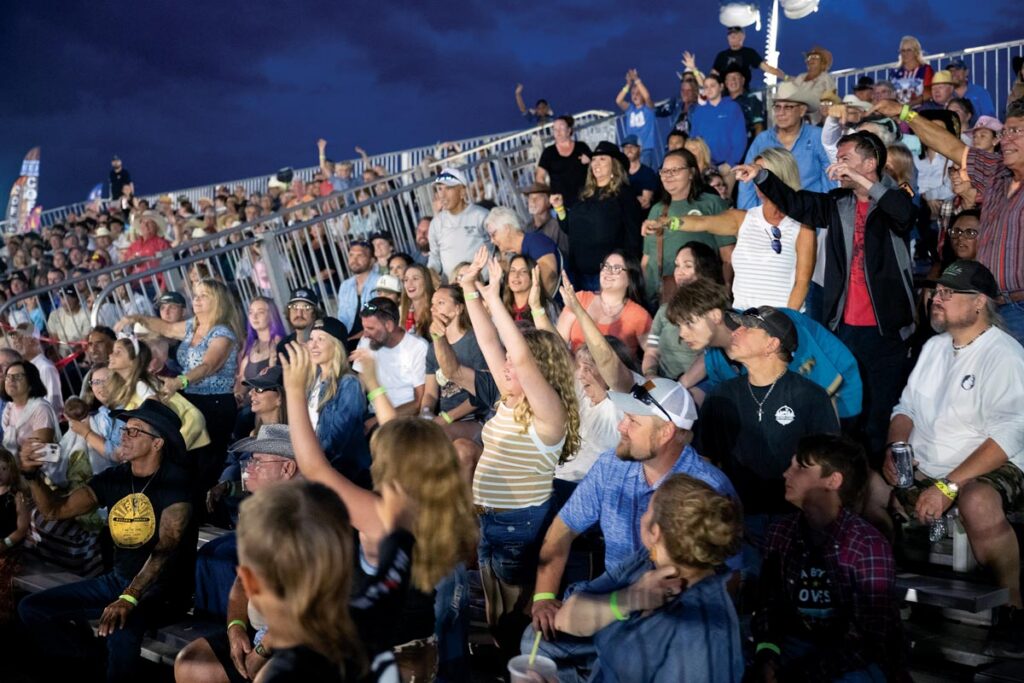
This sentiment rings true with the fans, as echoed by avid spectator Jason Wilson, owner of the wellness clinic Elevate Vero Beach. Wilson has gone to rodeos all over the United States, but he has a soft spot for Overpass Arena rodeos. He says, “There are lots of opportunities for personal experience with the riders and bulls, even with thousands of people attending. They also recognize the military and first responders and are always patriotic. If someone touches your emotions before the event even starts, it sets the tone for how you enjoy the show.”
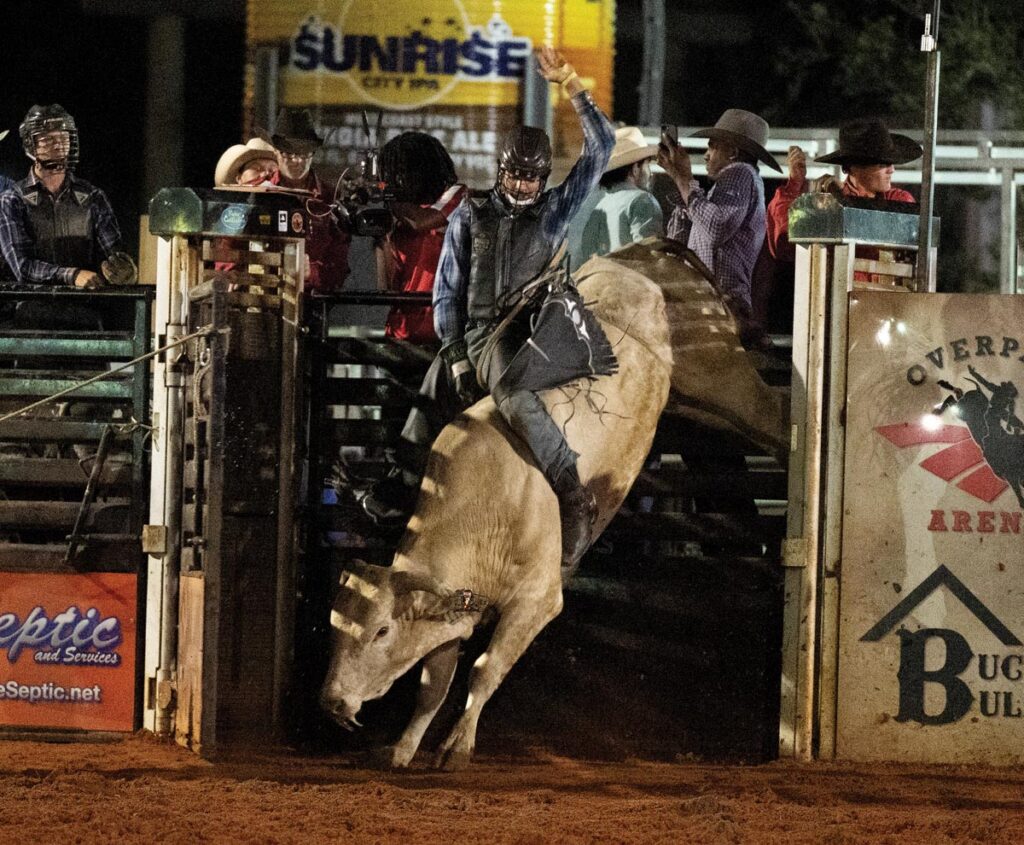
Wilson was in attendance at the inaugural Overpass Arena rodeo in 2025, which was such a success that it ushered in the venue’s Busch Light Rodeo Series. The series consists of four rodeos, one for each quarter of 2026. The first two were in January and April; the last two are September 4–5 and November 20–21. Each rodeo runs more smoothly than the last, as they learn from experience and listen to their supporters. As John says, “So many people just believed in the vision, it was unbelievable.”
While it is a huge investment to open an arena and raise bucking bulls, the Engleharts have found that the results are priceless. Not only can they introduce the rodeo world to their very own bulls, they also have countless ways to give back to the Vero Beach community. Sponsoring up-and-coming young riders has been a consistent joy, and they are proud to donate to multiple local charities and organizations. Both Engleharts agree, “Our team is always grinding for the next event, and we are just getting started.”
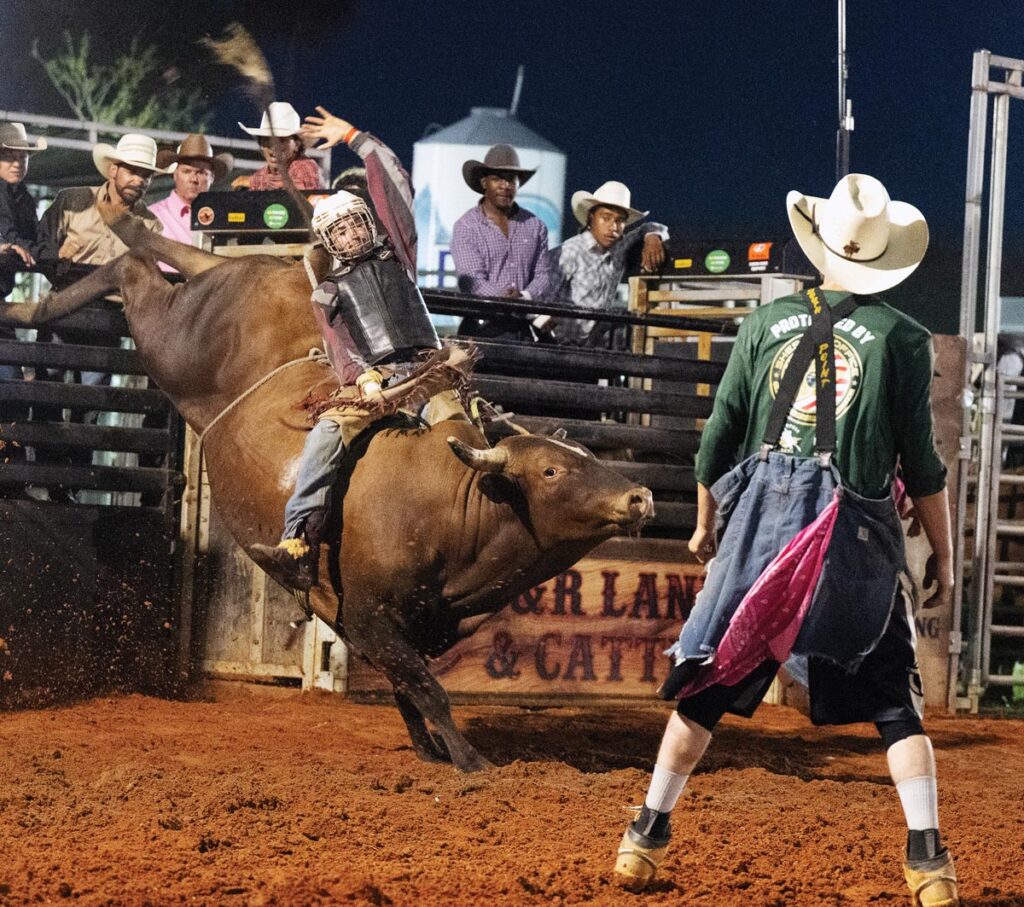
With endless possibilities for the future of the arena, it is sometimes hard to remember how much it has grown in less than a year. The fact that a simple spark of curiosity led to the inception of an entirely new piece of local culture seems overwhelming. However, as Shelley says, “When you pray for a purpose, you get an answer. This is my purpose, but John and I get to do it together. Had it been just a hobby, it would have been too singular.” By following her lead, both Engleharts learned exactly how to share their new adventure: under the spotlights, surrounded by applause, at the end of a dusty dirt road.



 True Tails is a series written by Amy Robinson for Vero Beach’s dog lovers. Ask Amy about your dog’s behavior by clicking below.
Facebook Comments